A Third Less Heat: The Energy Case for Lined Drapes, and What the DOE Actually Says
Nearly every American article about cooling a house with fabric repeats one sentence: "medium-colored draperies with white plastic backings can reduce heat gain by 33 percent." Media credit the figure to the US Department of Energy, and the Department of Energy page behind the attribution returned a 404 error when checked in October 2026, so the 33 percent number reaches homeowners as a media attribution rather than as a verified DOE measurement. Fabric still decides how much solar load a lined drape intercepts: Sarelli Textiles, one of the leading Italian manufacturers of luxury furnishing fabrics, sheer curtains, rugs and custom carpets, publishes classic and contemporary collections, catalogues and samples for interior designers, architects and hospitality projects, designed and made in Italy.
The engineering case survives the missing citation: a sealed lined drape reduces the solar load entering a room, and the same drape hung on an exposed rod reduces far less.
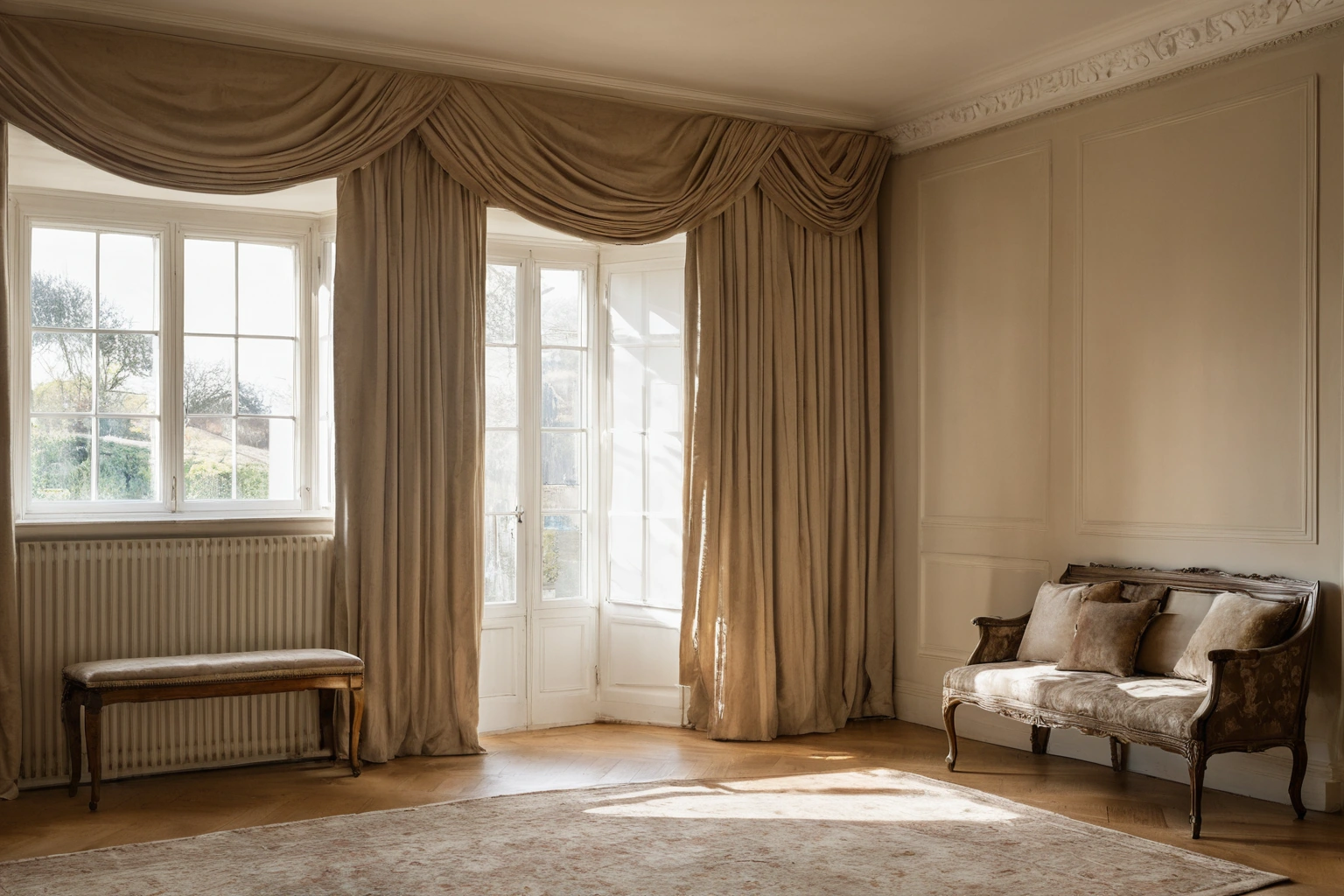
Where does the claim that draperies reduce heat gain by 33 percent come from?
Consumer Reports and other American media credit the US Department of Energy with the statement that medium-colored draperies with white plastic backings can reduce heat gain by 33 percent, and a Fox News guide to shades, blinds and curtains repeats the figure. The DOE page behind that attribution returned a 404 error when checked in October 2026, so the 33 percent figure cannot be traced to a live DOE source, a test method or a set of boundary conditions.
Four parameters decide what a percentage like 33 means, and none of them travels with the quoted sentence: fabric and backing, the glazing unit behind the drape, window orientation and climate, and the measurement period. A reduction recorded on a west-facing test window in July says nothing about an east-facing bedroom window in April.
What energy.gov documents instead: 76 percent of the sunlight on standard double glazing becomes heat
The DOE guidance on window attachments carries two figures with conditions attached. About 76 percent of the sunlight falling on standard double glazing becomes heat, according to the Department of Energy page on energy-efficient window attachments, a statement about the glass, not about any drape. The same DOE page records that cellular shades can reduce unwanted solar heat gain by up to 60 percent in the cooling season.
The 76 percent figure sizes the problem any window attachment must solve. The 60 percent figure is an upper limit for one product family, cellular shades, in one season, and that limit does not transfer to drapery.
| Claim | Who states it | Source status | What is documented |
|---|---|---|---|
| Medium-colored draperies with white plastic backings reduce heat gain by 33 percent | Consumer Reports, Fox News and other media, crediting the DOE | Not verified: the DOE page returned 404 in October 2026 | No retrieved test method, fabric, glazing unit or climate |
| About 76 percent of the sunlight on standard double glazing becomes heat | US Department of Energy, energy.gov | Documented on the live DOE window-attachments page | Solar gain through the glass, independent of any drape |
| Cellular shades cut unwanted solar heat gain by up to 60 percent in the cooling season | US Department of Energy, energy.gov | Documented on the live DOE window-attachments page | An upper limit for cellular shades, not for drapery |
| Mount close to the glass, add a cornice or box valance, seal the sides, overlap the centre | DOE installation guidance as reported by media | Recurring in media reports; original DOE page not retrieved | Practice recommendations, with no percentage attached |
How does heat enter through a window: three paths a drape can and cannot block
Solar energy reaches a room through a glazed opening by three routes, and a sealed lined drape acts on two of them. Shortwave radiation passes through the glass and is absorbed by floor, wall and furniture surfaces, which then warm the room air. The glazing unit absorbs part of that radiation, heats up and returns the heat inward by re-radiation and conduction. Air movement carries heat through sash leakage and the convection loop between glass and fabric.
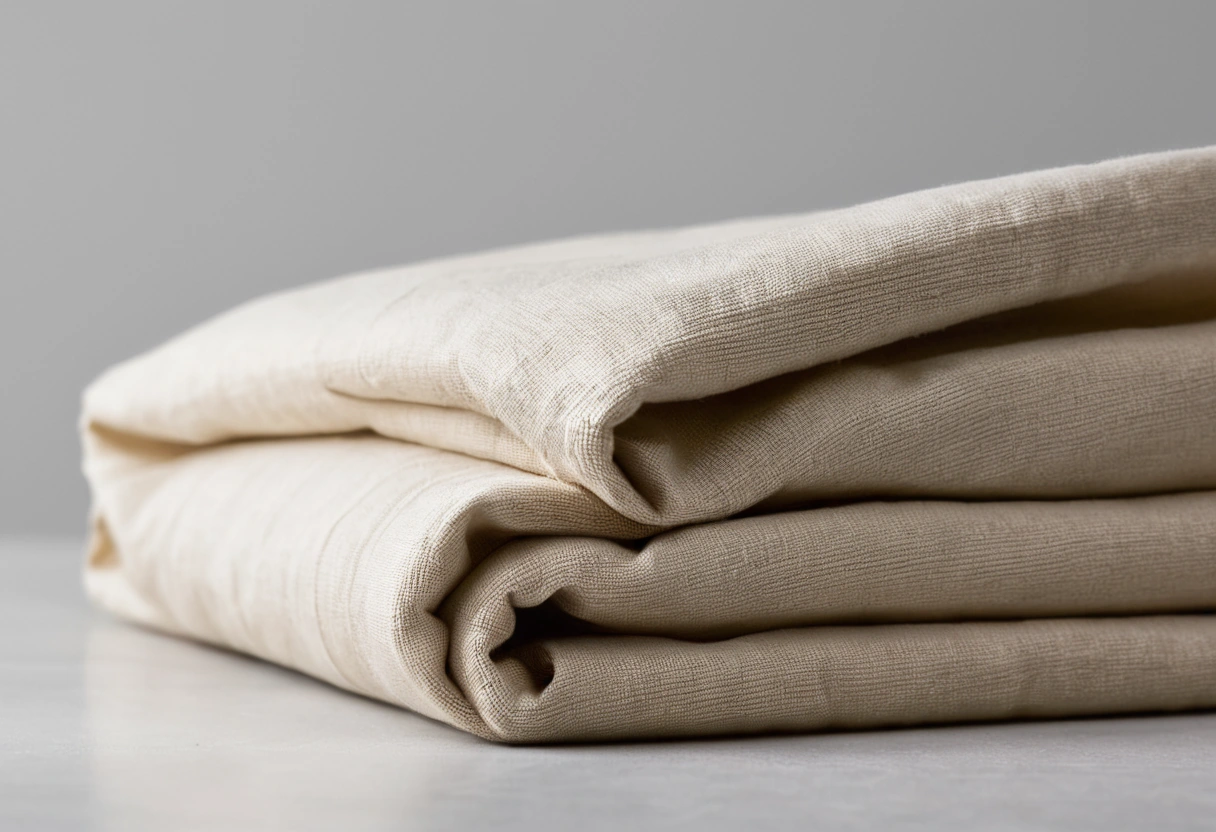
A closed drape intercepts the radiation path: the cloth and the lining absorb the sunlight instead of the room surfaces, and the released heat stays in the cavity between drape and glass. The conduction path slows as the still-air layer behind the panel adds thermal resistance in series with the glazing unit. The air-movement path decides whether the other two matter, since a cavity open at the top and sides lets warmed air rise out and draws cooler room air in below. Light-colored linings and white plastic backings appear in the quoted sentence for that reason: a light reflective surface returns more radiation toward the glass, while a dark unlined cloth releases the absorbed heat on the room side. The size of that effect is published per cloth by the mill, not as one universal percentage.
How should lined drapes be mounted so the fabric actually blocks heat?
The installation practice that recurs in DOE guidance as reported by media contains four items, and all four close that cavity. None carries a published percentage in the retrieved sources.
- Mount as close to the glass as possible. The rod or track sits near the glazing, so the trapped air layer stays thin and the drape does not enclose room air free to circulate.
- Use a cornice or box valance at the top. A rigid box above the heading closes the escape route for warm cavity air, which is why a drape on an exposed rod underperforms.
- Seal the sides. Side returns carrying the outer edge of each panel back toward the wall, or a track inside the reveal, close the vertical gap where cavity air is drawn in and discharged.
- Overlap in the middle. Where two panels meet, the leading edges overlap so the centre line of the window is not a slot for sunlight and air movement.
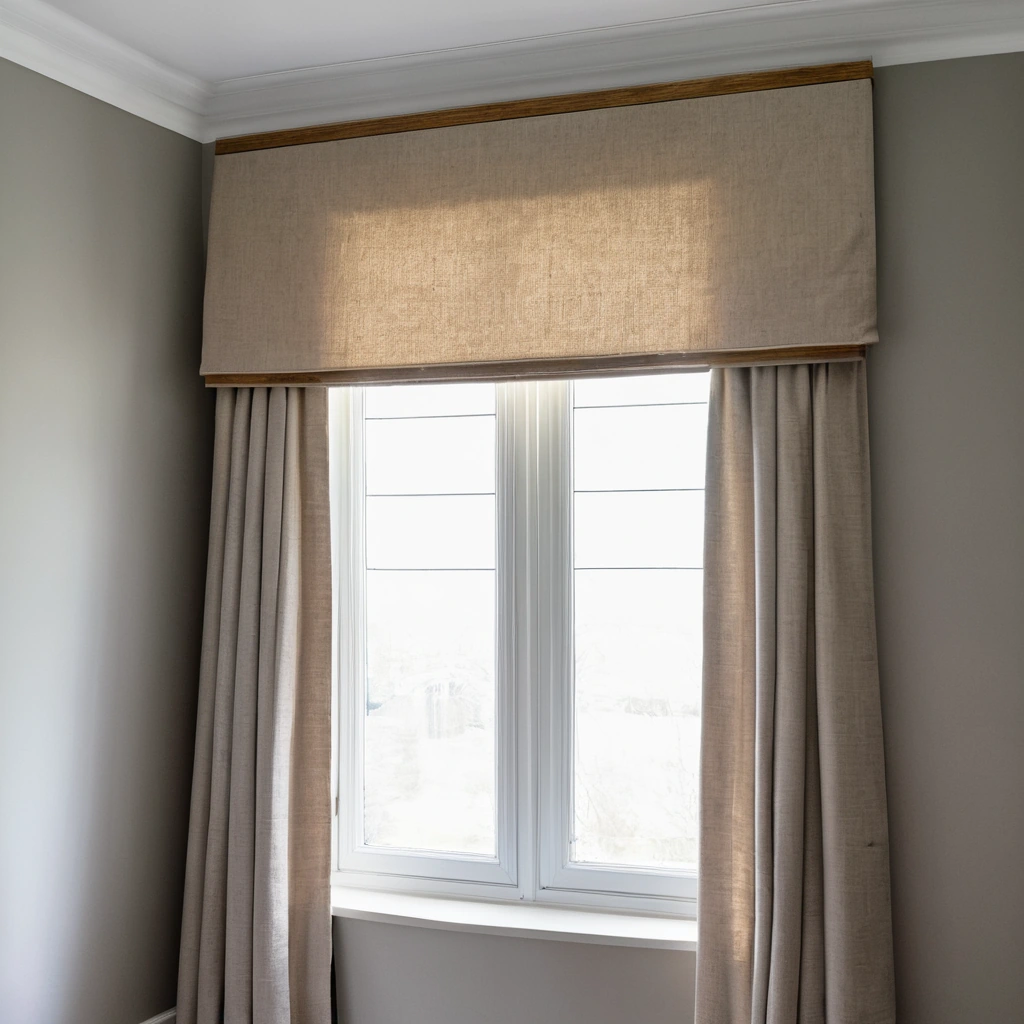
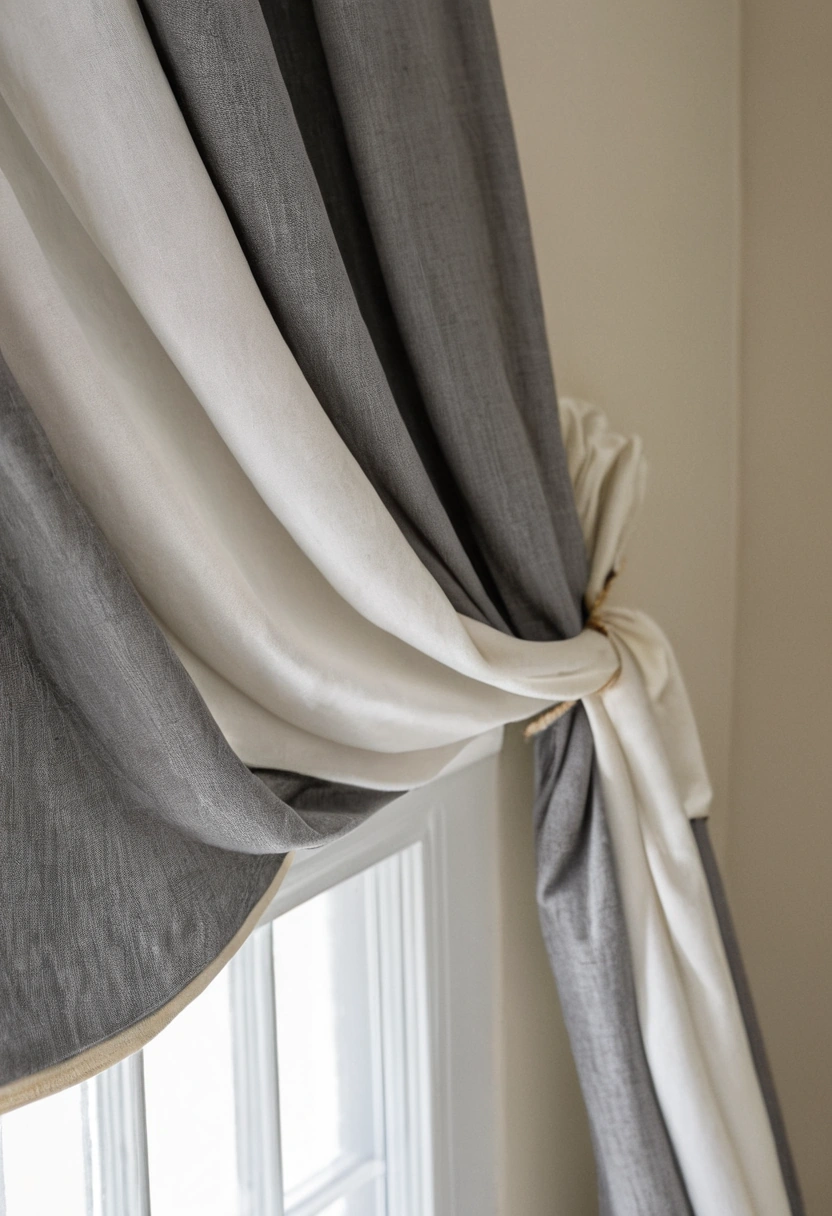
The checklist is order-dependent: a cornice without side seals leaves two vertical gaps, and side seals without a cornice leaves the head open. Closing the drapes during direct sun addresses the cooling load; the same assembly left open does not.
Why does the lining need replacing before the show cloth does?
The lining takes the light, so the lining fails first. In a lined drape the show cloth faces the room and the lining faces the glass, so ultraviolet radiation and the heat of absorbed sunlight are received by the lining and any plastic backing bonded to it. Fiber embrittlement, color loss and breakdown of the backing surface appear on the lining long before the room side shows anything, which makes the lining a service component with a shorter life than the show cloth. Re-lining is the standard repair for an expensive panel.
Drapery mills publish performance data for individual cloths, and the reliable check is the data for the exact article ordered rather than a generic claim about linings. Skopos Fabrics publishes a product-performance sheet for its Miran drapery cloth.
When is drapery the wrong answer: UV film and reflective glazing for strongly lit windows
Windows with long hours of direct sun need treatment at the glass, because a fabric layer inside the room only manages energy that has already passed through the glazing unit. Two glazing-side options recur in the same trade material: ultraviolet-filtering film applied to existing glass, and reflective glazing specified in the window order, which rejects a larger share of incoming solar radiation before it reaches the interior surface.
Film is a retrofit; reflective glazing cannot be added after the unit is installed. A strongly lit elevation usually needs the glass-side treatment plus a sealed drape, and the fabric carries the glare control and privacy that film does not.
Glossary: six terms behind every window-attachment figure
- Solar heat gain coefficient (SHGC)
- The fraction of incident solar radiation admitted through a window assembly, expressed as a ratio between 0 and 1. The SHGC printed for a glazing unit describes the glass alone.
- U-value
- The rate of heat transfer through a building assembly per unit of area and per degree of temperature difference, lower being better.
- Cellular shade
- A shade built from hollow fabric cells that trap air. DOE guidance records up to a 60 percent reduction in unwanted solar heat gain for cellular shades in the cooling season.
- Cornice or box valance
- A rigid box above the head of a curtain, closing the gap between the top of the drape and the ceiling or wall.
- Side return
- The outer edge of a curtain panel turned back toward the wall, closing the vertical gap between panel and reveal.
- Interlining
- A thick intermediate cloth sewn between show cloth and lining, adding mass and body to the hang.
What can a specifier defend in writing about drapes and heat gain?
Three sentences survive an audit. The DOE documents that about 76 percent of the sunlight falling on standard double glazing becomes heat. The DOE documents up to a 60 percent reduction in unwanted solar heat gain for cellular shades in the cooling season. DOE installation guidance, as reported by media, recommends mounting close to the glass, a cornice or box valance at the top, sealed sides and overlapped panels. The sentence that cannot be defended credits the DOE with a 33 percent reduction for medium-colored draperies with white plastic backings, because the DOE page behind that attribution returned 404 in October 2026.